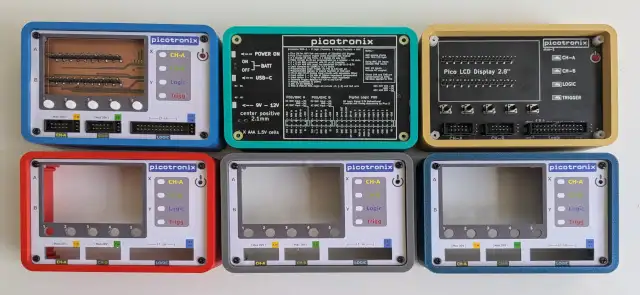
For decades, electronic engineers defaulted to benchtop instruments: big metal boxes lined up across a workbench, each dedicated to a single task. Oscilloscopes, spectrum analyzers, signal generators — all powerful, all reliable, all expensive.
But as hardware cycles accelerated and teams needed faster iteration, a new class of tools has taken the lead: modular instruments. These compact, software-driven modules are reshaping how labs build, measure, and scale their setups. Here’s why they consistently outperform traditional benchtop gear.
1. Modularity means scalability

Benchtop instruments force you to buy everything up front — even features you won’t use. Need one extra channel? You’re buying an entire new unit.
Modular systems flip this model:
- Add channels individually
- Upgrade only the modules you need
- Mix and match different functions without replacing the entire stack
This “scale as you grow” architecture keeps budgets under control and lets engineers expand capacity without reorganizing their workbench.
2. Smaller footprint, bigger performance

Modern labs often work with limited space. Modular instruments pack high-performance electronics into compact enclosures that can be stacked, racked, or embedded directly into test setups.
Compared to bulky benchtop gear, the benefits are immediate:
- Less desk real estate
- Cleaner cable management
- Easier integration into automation rigs
- Quiet, efficient cooling
Performance isn’t compromised. In many categories—signal generation, acquisition, switching—modular units now match or exceed benchtop specs.
3. Software-defined workflow
Benchtop instruments rely heavily on physical interfaces. Modular systems rely on APIs and firmware, making them:
- Faster to update
- Easier to automate
- More adaptable to custom workflows
- Integrable with CI pipelines and remote control systems
Instead of walking between instruments, engineers can script entire measurement sequences from one place. Firmware updates also extend the hardware life cycle — something benchtop gear historically struggles with.
4. Lower long-term cost
A single benchtop device can cost thousands. But the real cost is replacement:
one outdated feature often means replacing the entire box.
Modular instrumentation avoids this:
- Swap individual modules
- Upgrade performance only where needed
- Reuse common chassis and infrastructure
- Reduce calibration and maintenance overhead
Over several hardware cycles, modular ecosystems consistently deliver lower total cost of ownership.
5. Built for modern, distributed teams
Remote debugging, automated test benches, headless setups — this is the new normal for engineering teams.
Modular systems are inherently network-ready and automation-friendly. Benchtop gear often isn’t.
Whether you’re running long-term logs, remote experiments, or CI-driven validation, modular stacks offer the flexibility today’s workflows demand.
Conclusion
Benchtop instruments will always have a place, especially in educational labs and one-off measurements. But for teams building products, running complex tests, or scaling their measurement capabilities, modular instruments deliver better performance, flexibility, and future-proofing.
In short:
they’re not just smaller versions of benchtop gear —
they’re a smarter way to build your lab.